• Alice Wang
• Whatsapp: +8613379289277
• Email: info@ceresherb.com
• Products Categories: Dietary Supplement Ingredients
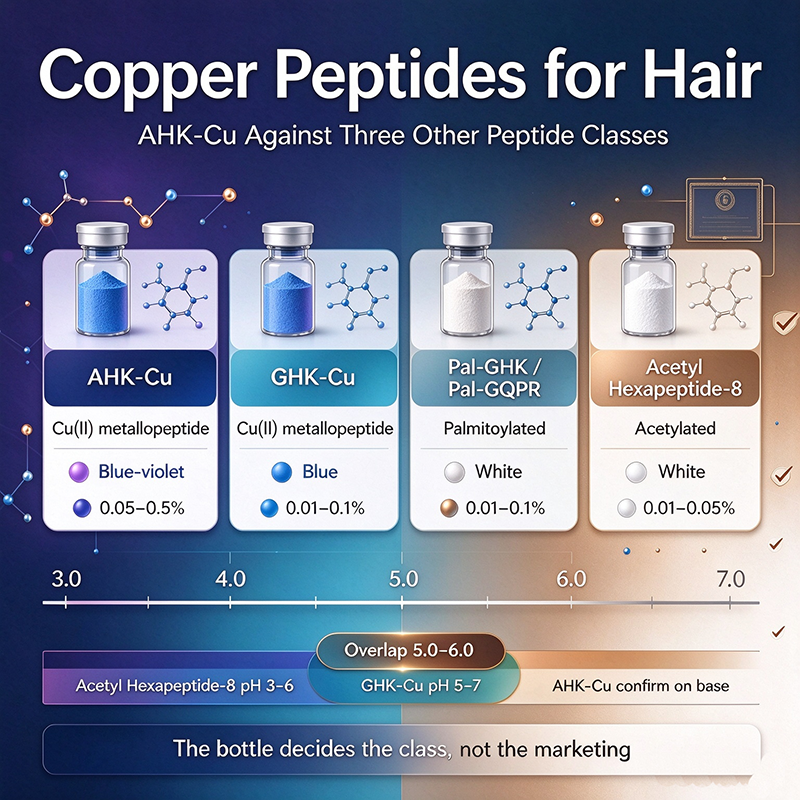
When you shop for a copper peptide for hair care formulas, most catalogues file GHK-Cu and AHK-Cu under one "copper peptide" label. They are not the same molecule. This is what AHK-Cu hair peptide powder actually is, why formulators keep it separate from GHK-Cu, and what to check on the certificate before you quote.
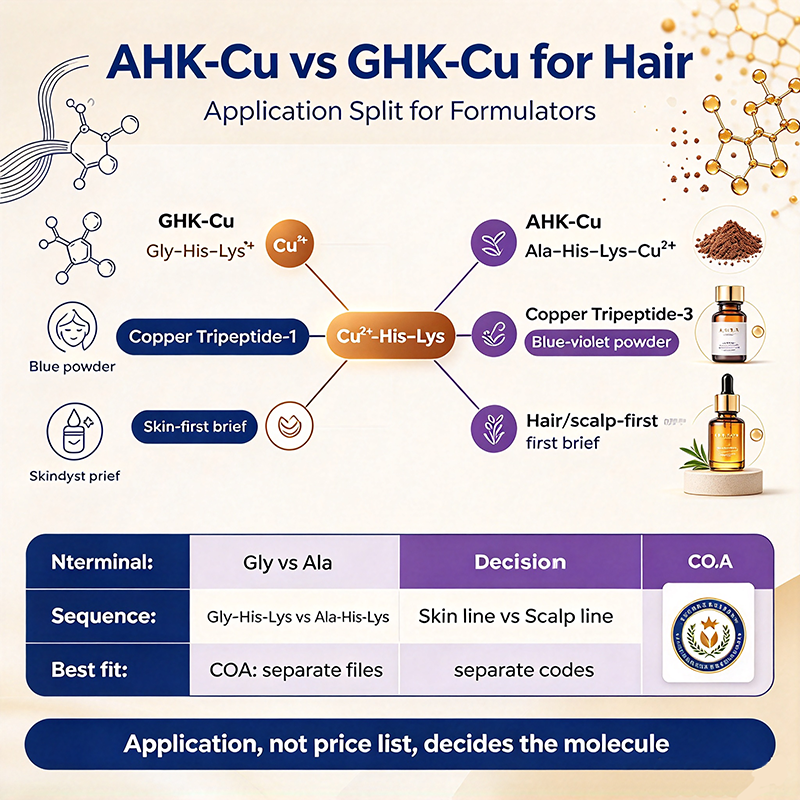
When you open a copper-peptide quote, the line item often reads only "copper peptide" or "blue copper peptide." That single phrase hides two distinct tripeptides. Both carry the same copper center and the same histidine–lysine backbone, but they differ by exactly one amino acid at the N-terminus. For a hair-care brand, that one residue is the difference between a skin-focused ingredient and one that formulators reach for in scalp and hair formulas. Sourcing blindly against the generic name means you may receive the wrong variant for your application — and only discover it after the drum is on your line.
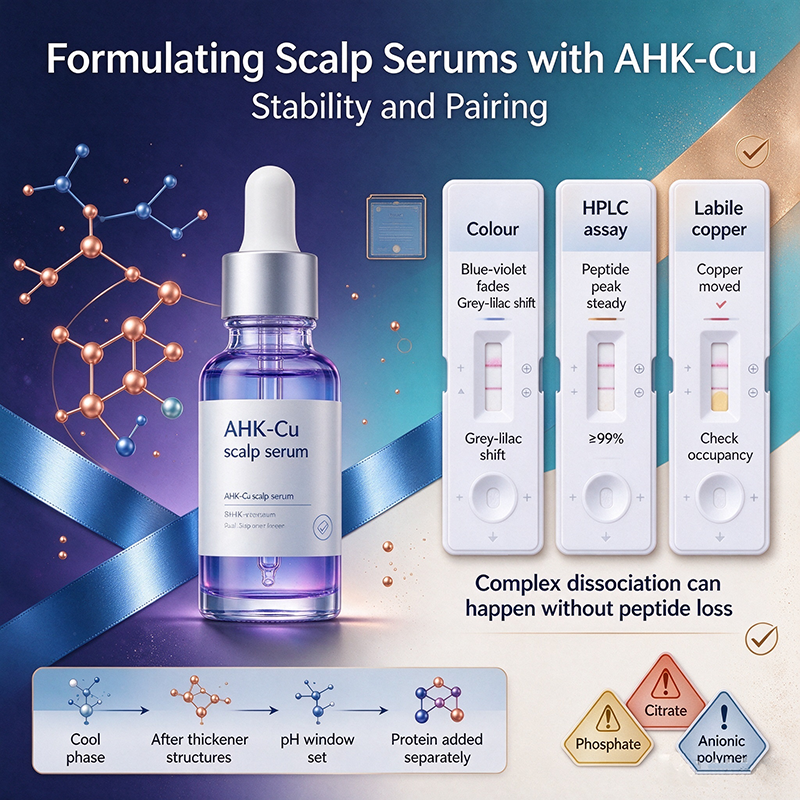
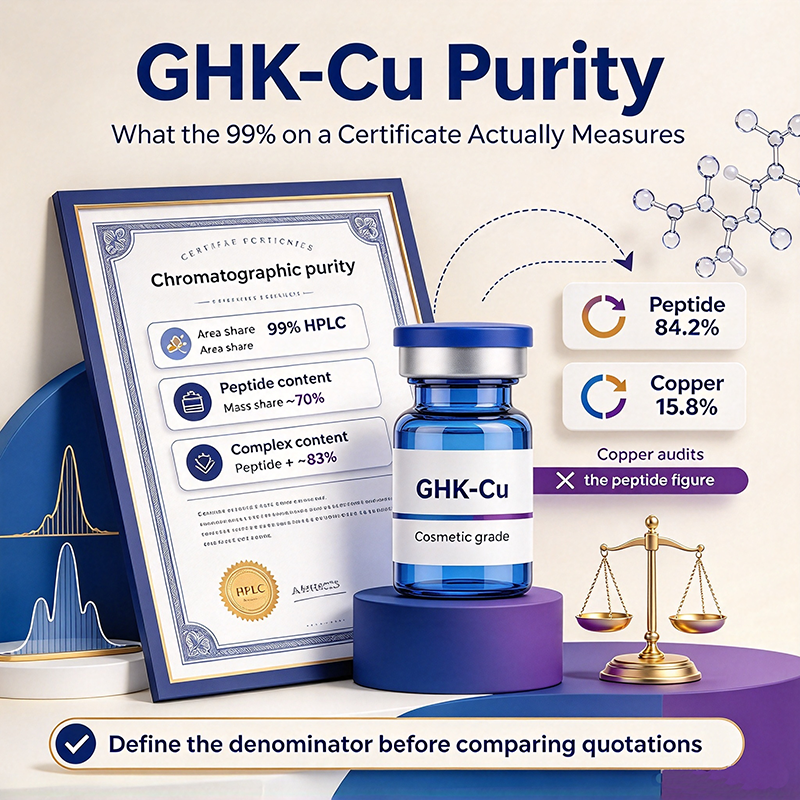
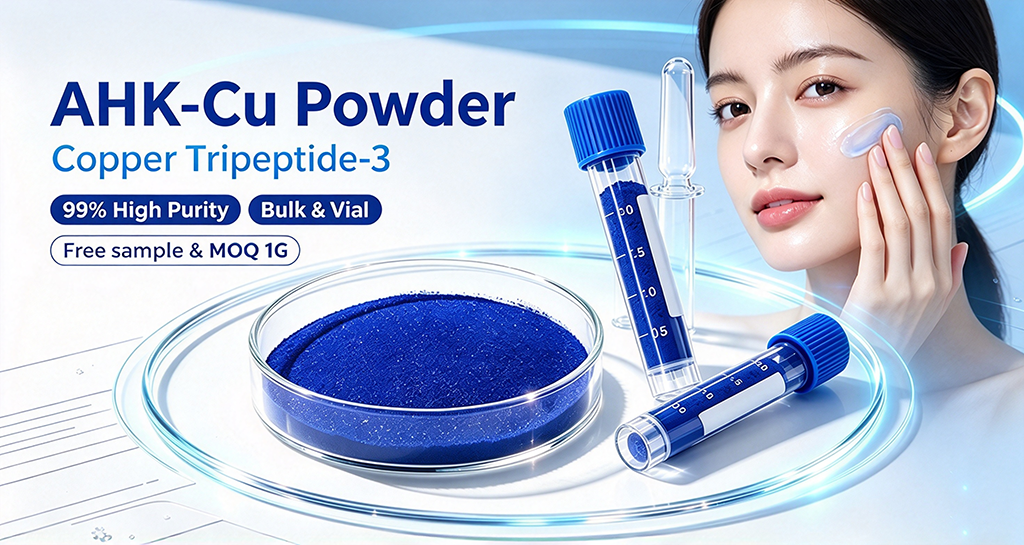
AHK-Cu is the L-alanyl-L-histidyl-L-lysine copper complex, also listed in formulations as Copper Tripeptide-3. Chemically, it is the alanine-substituted analogue of GHK-Cu: where GHK-Cu begins with Glycine, AHK-Cu replaces that N-terminal glycine with alanine (Ala for Gly). The copper–histidine–lysine core is unchanged; the swap sits only at the first position. As supplied, it is a cosmetic-gradeblue-violet powder, typically specified at 99% purity. That appearance and purity are your first two checks — a grey or off-color lot, or a missing purity figure, is a reason to ask before you buy.
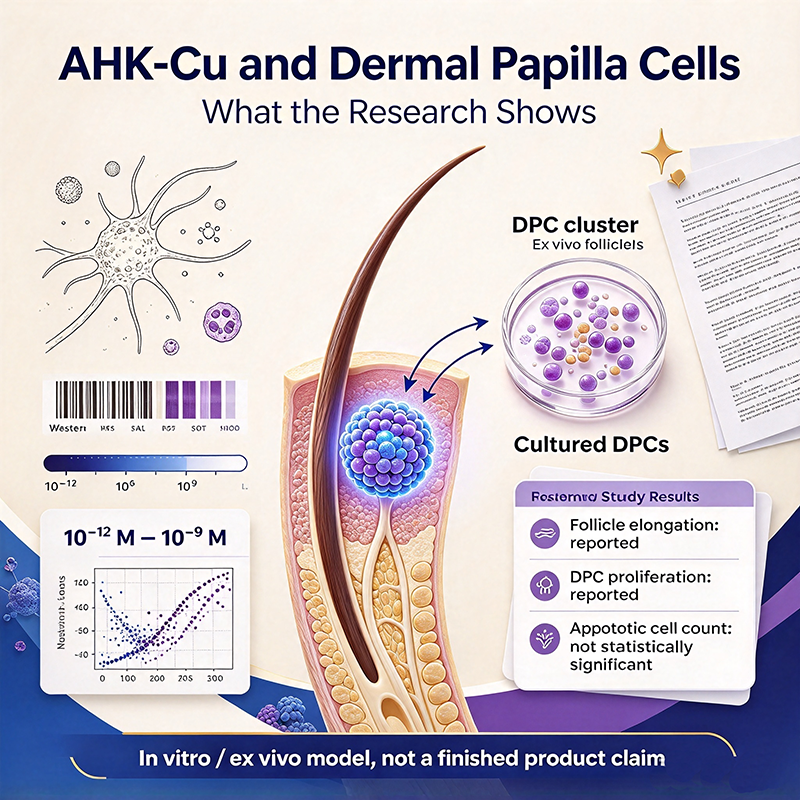
The reason AHK-Cu earns its own line item is the body of work around the hair follicle. A peer-reviewed study evaluated L-alanyl-L-histidyl-L-lysine-Cu²⁺ (AHK-Cu) on human hair follicles studied ex vivo and on cultured dermal papilla cells — the specialized fibroblasts at the base of the follicle. The work reported stimulation of hair-follicle elongation and proliferation of dermal papilla cells at specific concentrations (Pyo et al., 2007; PubMed 17703734). Copper peptides as a family have also been examined in hair contexts, including GHK-based complexes in clinical hair studies (Lee et al., 2016; PubMed 27489425).
These are laboratory and ex vivo observations; how any finished product is positioned is the brand's responsibility, and we are not making an efficacy claim here. What the literature gives you is a clear signal: if your brief is hair and scalp care, AHK-Cu is the copper peptide variant the research most directly addresses.
When you request a quote for AHK-Cu powder, ask for the parameters that protect your finished product — not a factory photo. For a cosmetic-grade material we list:
The differentiator is not "more peptide" — it is a measured, per-batch specification you can formulate against.
AHK-Cu is positioned for scalp serums, leave-in products, and other hair- and scalp-care formats where a copper peptide is the active story. Brands often run it alongside GHK-Cu in a copper-peptide family: GHK-Cu for skin-focused lines, AHK-Cu for hair-focused lines. If your formula is skin-led, see our GHK-Cu blue copper peptide powder for skincare raw material.
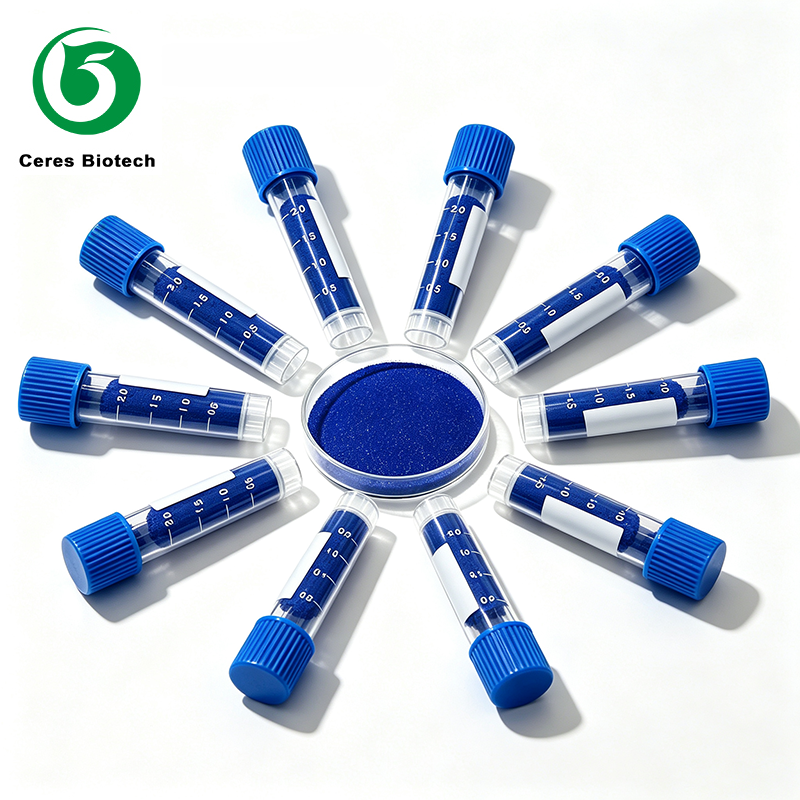
Cosmetic-grade AHK-Cu (L-alanyl-L-histidyl-L-lysine copper complex). Blue-violet powder, 99% purity, for hair and scalp care formulas — scalp serums and leave-in formats.
View product & spec →As a China-based supplier of AHK-Cu powder, we back the above with full documentation and a per-batch COA on every lot. Send us your RFQ for AHK-Cu hair peptide powder — tell us your target purity and your intended format (scalp serum, leave-in, or premix), and we will return a specification you can formulate against.
Request a sample or quote →Full COA and MSDS per batch, flexible MOQ and competitive pricing available — request a sample or quote. (Factory audits, certifications and pricing are handled separately and do not define product activity.)