• Alice Wang
• Whatsapp: +8613379289277
• Email: info@ceresherb.com
• Products Categories: Dietary Supplement Ingredients

When a supplier sends you "black Garlic Extract," how do you know it was actually aged — and not raw garlic powder with a dark color? For S-allyl-cysteine buyers, the answer is a number, not a claim. Here is why an HPLC-quantified SAC spec is the only defensible proof of genuine aging.
The hardest problem in sourcing black garlic extract is invisible to the eye. Raw garlic powder, under-aged material, and a genuinely aged extract can all arrive as a brownish powder that looks plausible on the dock. Yet they are chemically different products. A buyer who specifies only "garlic extract" with no quantified marker is buying a lottery: the actives your label promises may simply not be there, and your contract manufacturer cannot catch it at incoming inspection.
This is the pain a procurement lead actually carries — a supplier audit that passes on paper, then a finished batch that tests weak, or a competitor's product that outperforms yours from the same "equivalent" ingredient. The fix is not more trust; it is a measurable marker.
S-allyl-cysteine (SAC) is not present in meaningful amounts in raw garlic. It is generated during the controlled aging step — the Maillard reaction under heat and humidity (typically 60–90°C and 70–90% RH) that turns fresh garlic into black garlic. Reports put the SAC increase from thermal aging at well over a hundredfold versus fresh cloves, because the process converts precursor compounds into the stable SAC (Manoonphol et al., 2023; Kang et al., 2022).
That makes SAC the chemical fingerprint of genuine aging. If a powder is labeled "black garlic extract" but shows no SAC on HPLC, it was never properly aged — it is, at best, dried garlic. For a buyer, SAC % by HPLC is therefore the single most honest question you can ask a supplier.
The reason a quantified spec matters is the spread in the market. A survey of commercial black garlic extracts found SAC contents ranging from 0.31 to 27.22 mg/100 mL in liquid extracts, and 22.28–63.71 mg/100 g in cloves — an enormous, uncontrolled variation that the authors explicitly flag as requiring standardization (Woo et al., 2022). Two "black garlic extracts" from different suppliers can differ by more than an order of magnitude in the very compound your product is built around.
Sourcing S-allyl-cysteine without an SAC number on the specification means accepting that spread into your own finished product. Your sensory panel and your assay lab will see it; your customers will feel it. The differentiator between suppliers is not who grows the garlic — it is who puts a verified number on the COA.
When you request a quote for S-allyl-cysteine, our reply leads with the parameters that protect your batch — not a factory photo. For our black garlic extract we list:
We supply the characterized, SAC-standardized extract; the formulation decision is yours. Our job is to give your contract manufacturer a powder whose SAC content is known before it reaches your line — not guessed after.
A quantified SAC spec does three things a vague "garlic extract" label cannot. It makes your incoming inspection decisive — pass or fail on a number. It makes your formulation reproducible, because the actives level is fixed, not sampled from a wide market spread. And it makes your supply auditable, because every lot carries the same HPLC evidence of genuine aging. For brands competing on consistency, that is the whole game.
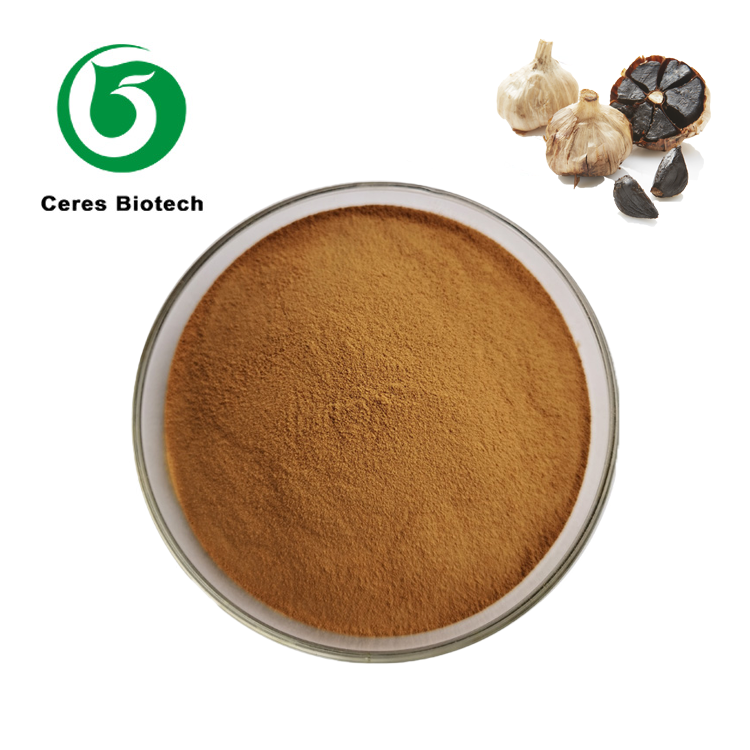
Food-grade black garlic extract standardized to 1% S-allyl-cysteine. SAC quantified by HPLC on every COA; identity by TLC/HPLC; produced by controlled Maillard aging.
View product & spec →As a China-based supplier of black garlic extract, we back the above with a per-batch HPLC SAC quantification on every lot. Send us your RFQ for S-allyl-cysteine — tell us your target SAC level and format, and we will return a specification with the number on it, not just a claim.
Request a sample or quote →Full COA and MSDS per batch, flexible MOQ and competitive pricing available — request a sample or quote. (Factory audits, certifications and pricing are handled separately and do not define product activity.)