Inquiry Now
Leave Your MesSAGe

Sourcing Food-Grade & Cosmetic-Grade Astaxanthin from China: One Supplier, Two Forms

2026-09-24 Sourcing Food-Grade & Cosmetic-Grade Astaxanthin from China: One Suppl - Ceres Biotech
Buyer's Guide · Astaxanthin

Sourcing Food-Grade & Cosmetic-Grade Astaxanthin from China: One Supplier, Two Forms

For formulators moving from aquaculture feed into functional food and anti-aging skincare, the China astaxanthin market now has to deliver both grades and both forms from a single, reliable source — not two vendors and twice the paperwork.

The shift your RFQ is already showing

When buyers request quotes from the China astaxanthin market today, the brief looks nothing like it did five years ago. Back then, most enquiries were feed-grade: bulk carotenoid for salmon and shrimp pigmentation, bought on price per kilo. The requests now landing on our desk read "food grade, 5% powder, for gummies" or "cosmetic grade oleoresin, for a serum." The demand center has moved from the fish pond to the pharmacy shelf and the bathroom cabinet — and that migration changes what a buyer should expect from a supplier, not the other way around.

If your current vendor in the China astaxanthin market only ships feed-grade, you are not seeing the whole market. The natural, grade-flexible material is here; you just have to ask for it by name in the RFQ.

Why "food grade + cosmetic grade" on one line matters

If you formulate both an ingestible product and a topical one, sourcing food-grade from Supplier A and cosmetic-grade from Supplier B doubles your supplier qualification, your documentation load, and your batch-risk exposure. At Ceres we supply natural astaxanthin that meets food grade and cosmetic grade from the same Haematococcus pluvialis biomass, so your certificate language, your batch traceability, and your specification stay consistent across both SKUs. For a brand launching an "inside-out beauty" stack, that consistency is what keeps the launch date instead of slipping it.

Why the form — powder vs oleoresin — is your call, not the supplier's

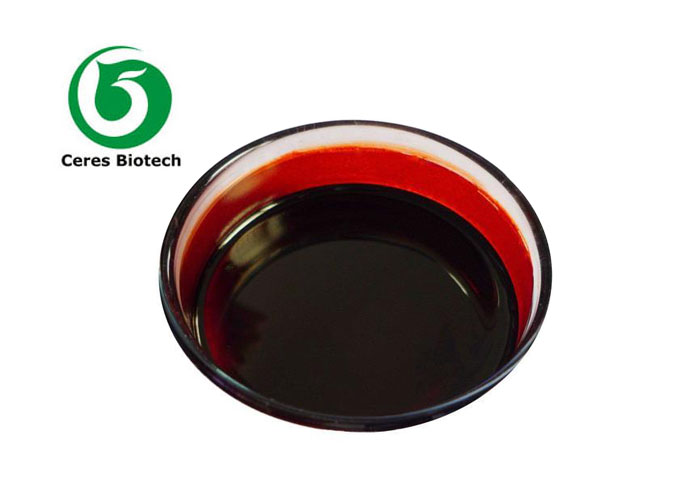
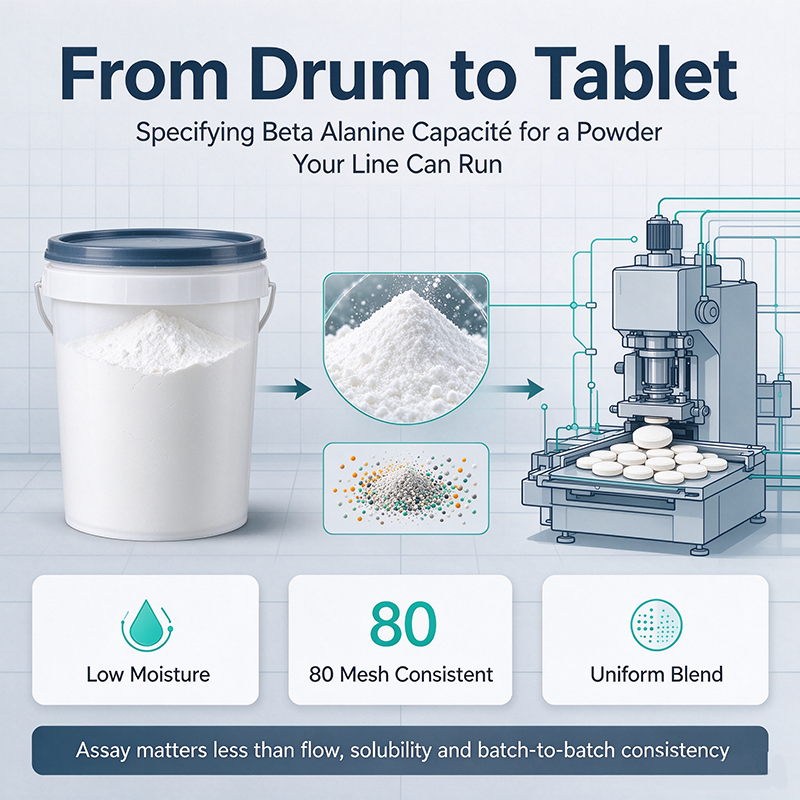
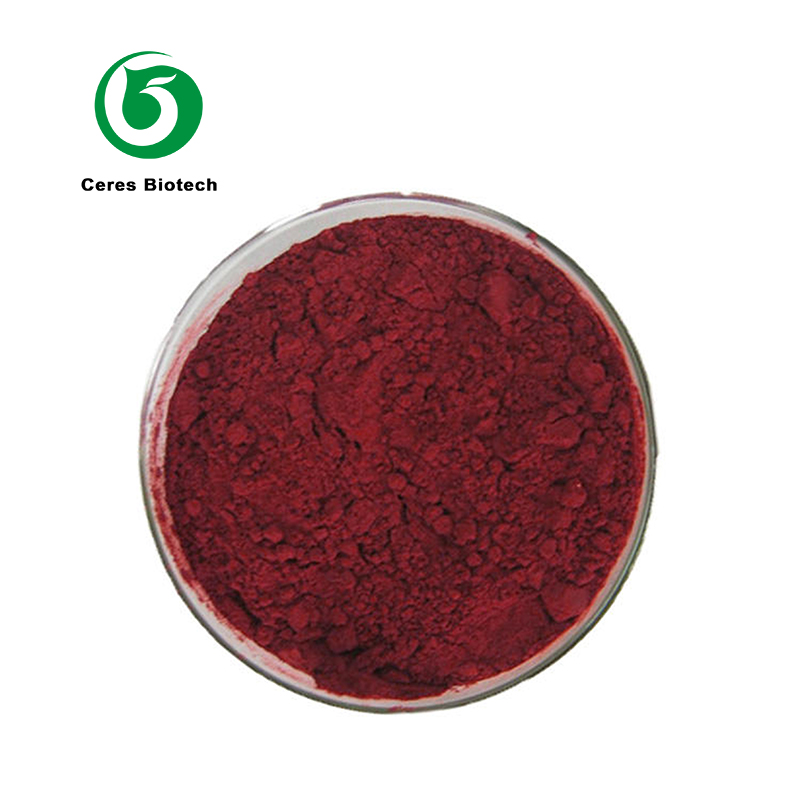
The second mistake buyers make is assuming one format fits every product. Our 5%/10% astaxanthin powder at 80 mesh blends into tablets, stick packs and ready-to-drink mixes where flow and dispersion matter. Our oleoresin — a dark red viscous oil — is what softgel and skincare-base developers actually want, because it disperses into lipids without the pre-processing a powder would need. Both come from the same natural microalgae source, both are HPLC-verified per batch, and both sit in a 1%–10% range you can dial to your label claim rather than accepting a fixed number that forces your formula around it.
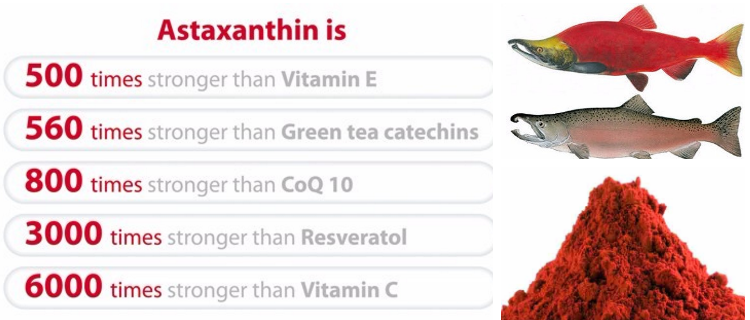
Astaxanthin natural source and in-vitro antioxidant potency versus common antioxidants
Astaxanthin's in-vitro antioxidant activity versus common antioxidants (laboratory measurement, not a clinical or efficacy claim). The salmon show the natural accumulation that defines the microalgae source.

Two astaxanthin SKUs we ship against this spec

Food grade natural Haematococcus pluvialis 5% 10% astaxanthin powder
Food Grade · Powder

Natural Astaxanthin Powder 5% / 10% (Haematococcus pluvialis)

Assay ≥5.0% HPLC (batch 5.15%) · 80 mesh 100% pass · Loss on drying 5.4% (≤8.0%) · Ash 2.4% (≤5.0%) · Solvent residue None · Per-shipment COA.

View product & spec →
Natural astaxanthin powder and oil extract 1 percent to 10 percent food and cosmetic grade
Food + Cosmetic Grade · Powder & Oil

Astaxanthin Powder & Oil Extract 1%–10% (Food & Cosmetic Grade)

Powder 80 mesh OR dark-red oleoresin · Food & Cosmetic dual grade · 1%–10% adjustable · Heavy metals per cosmetic limits · Every batch HPLC-verified before release.

View product & spec →

What we return against your RFQ

  • Natural source: Haematococcus pluvialismicroalgae, not synthetic — the isomer profile buyers specify for Bioavailability.
  • Grade: food grade and cosmetic grade, dual-certified on the same lot where your formulation needs both.
  • Form: 80-mesh powder, dark-red oleoresin, or both — your formulation decides, not our catalogue.
  • Assay: 5%/10% powder (HPLC; batch 5.15% against a ≥5.0% spec) and a 1%–10% adjustable oil/powder range.
  • Purity: solvent residue None; loss on drying 5.4% (≤8.0%); ash 2.4% (≤5.0%); heavy metals within cosmetic-grade limits.
  • Documentation: full COA with every shipment, each lot traceable back to harvest — so a question raised months later is answered with records, not guesses.

Why buyers come to the China astaxanthin market for this

The China astaxanthin market supplies a large share of the world's natural Haematococcus pluvialis extract, which is why formulators weighing lead time, volume and price land here first. The old trade-off was "cheap but feed-only." That trade-off no longer holds: natural, dual-grade, dual-form material is now standard from established suppliers — provided you write it explicitly into the RFQ instead of accepting whatever a quote defaults to.

Request a sample or quote

As a top China-based natural astaxanthin supplier, Ceres ships food- and cosmetic-grade Haematococcus pluvialis extract in both powder and oleoresin form, with full COA and batch traceability on every lot. If your next launch needs a single source for both grades and both forms, request a sample and specification sheet, or send us your RFQ — we quote against your exact label claim, not a catalogue number.

References

  1. Ambati R.R., Phang S.M., Ravi S., Aswathanarayana R.G. (2014). Astaxanthin: Sources, Extraction, Stability, Biological Activities and Its Commercial Applications—A Review. Marine Drugs, 12(1):128–152. (Natural sources, microalgae cultivation and application scope of H. pluvialis astaxanthin.)
  2. Ng Q.X., De Deyn M.L.Z.Q., Loke W., Foo N.X., Chan H.W., Yeo W.S. (2020). Effects of Astaxanthin Supplementation on Skin Health: A Systematic Review of Clinical Studies. Journal of Dietary Supplements, 18(2):169–182. PMID: 32202443. (Review of 11 clinical studies; oral dose range 3–6 mg/d associated with improved skin moisture, texture and UV protection.)
  3. Zhou X., Cao Q., Orfila C., Zhao J., Zhang L. (2021). Systematic Review and Meta-Analysis on the Effects of Astaxanthin on Human Skin Ageing. Nutrients, 13(9):2917. (Meta-analysis of RCTs: oral astaxanthin improved skin moisture SMD 0.53 and elasticity SMD 0.77 versus placebo.)
• Alice Wang
• Whatsapp: +8613379289277
• Email: info@ceresherb.com
• Products Categories: Dietary Supplement Ingredients