• Alice Wang
• Whatsapp: +8613379289277
• Email: info@ceresherb.com
• Products Categories: Dietary Supplement Ingredients

When you circulate an RFQ across the China astaxanthin market, almost every supplier comes back with a tidy certificate of analysis. Moisture, ash, mesh, total astaxanthin — all green. It looks reassuring, and it is also almost useless. Those four tests are exactly what every powdered botanical or algal ingredient passes; they confirm the powder is dry, clean and fine, but they say nothing about whether the astaxanthin inside is the bioactive, oxidation-stable, naturally configured molecule your formulation actually needs. Below are the five parameters that are specific to astaxanthin itself — the ones a serious buyer should ask for by name, and the ones we report on every lot we ship.
Astaxanthin carries three chiral centres, and the stereoisomer profile is the single biggest difference between natural and synthetic material. Astaxanthin from Haematococcus pluvialisis dominated by the all-E (3S,3'S) isomer — the configuration the human body is equipped to handle. Synthetic astaxanthin, by contrast, is a racemic mixture of (3R,3'R), (3S,3'S) and (3R,3'S) in roughly a 1:2:1 ratio, with a high proportion of cis forms. The catch for a buyer: most COAs only print "total astaxanthin %". A number like 5.0% tells you nothing about which isomers you are holding. If a supplier cannot break the result down by isomer, you cannot tell a natural algal extract from a petro-derived racemate. On our certificates the stereoisomer profile is reported, and it reflects the natural all-E-dominant signature ofH. pluvialis rather than a synthetic 1:2:1 blend.
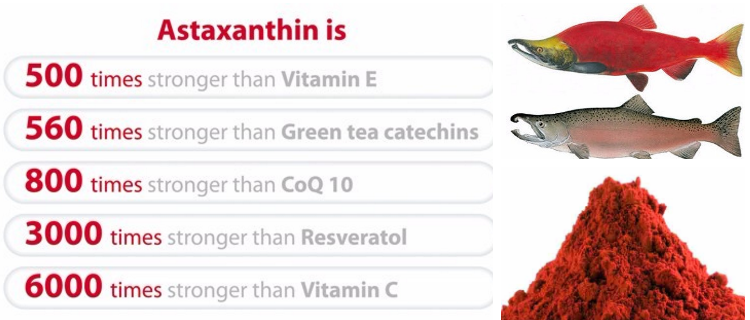
Inside the algal cell, astaxanthin is not free; it is stored mostly as mono- and di-esters bound to fatty acids. That esterified form is what a genuine Haematococcus extract delivers, and it is meaningfully more resistant to oxidation than the free molecule. Synthetic astaxanthin, however, is usually supplied as free astaxanthin. The practical problem for a buyer: a COA that lists only "astaxanthin" hides whether the material is an esterified algal extract, free synthetic, or a de-esterified blend. The free-to-esterified ratio is therefore an astaxanthin-specific spec worth requesting by name. We state the esterification profile and the free/esterified ratio on the lot documentation, so a formulator knows exactly what stability they are building around.
"Natural" is a word attached to almost everything in this category. Natural must mean a named biological source, and for astaxanthin the source that matters is the microalgae Haematococcus pluvialis. We supply astaxanthin extracted from cultivated H. pluvialis and we provide a species and origin declaration with each shipment, so a buyer is not taking "natural" on trust. When you are comparing offers in the China astaxanthin market, ask the simple question — which strain, which species? A supplier who answers with a Latin name and a cultivation record is a different proposition from one who answers only with a price.
Astaxanthin has a characteristic ultraviolet-visible absorption maximum in the range of roughly 470–480 nm. That lambda max, together with the absorbance ratio between peaks, is a fast fingerprint that the coloured material in your bag is actually astaxanthin and not a cheaper red pigment substituted to match the eye. Just as important: a drift in lambda max between two lots is an early warning of oxidation or adulteration long before the powder looks off-colour. We record lambda max on the certificate of analysis, which lets a buyer trend stability across deliveries instead of discovering a problem only in the finished product.
Because astaxanthin is a carotenoid, it oxidises readily under light, heat and oxygen; once oxidised it loses both colour and biological activity. The esterified natural form resists this better than free astaxanthin, but packaging still decides whether the molecule survives the journey to your line. We pack in aluminium foil with a nitrogen-flush option and we state the oxidation-stability expectation on the COA. A buyer who specifies only moisture and ash will miss this entirely — yet oxidation, not moisture, is what actually destroys astaxanthin value over time.
Here is the parameter class that generic testing will never catch. Because the starting material is algal biomass, there is a contaminant risk that simply does not exist for synthetic or plant-derived material: cyanotoxins such as microcystins, alongside the usual heavy-metal load. A responsible grower screens every batch and reports these as "not detected" against defined limits. We include microcystin (and aflatoxin and heavy-metal) screening on the COA. If a supplier's quality package stops at moisture, ash and mesh, those algal toxins are exactly the gap a buyer should worry about.
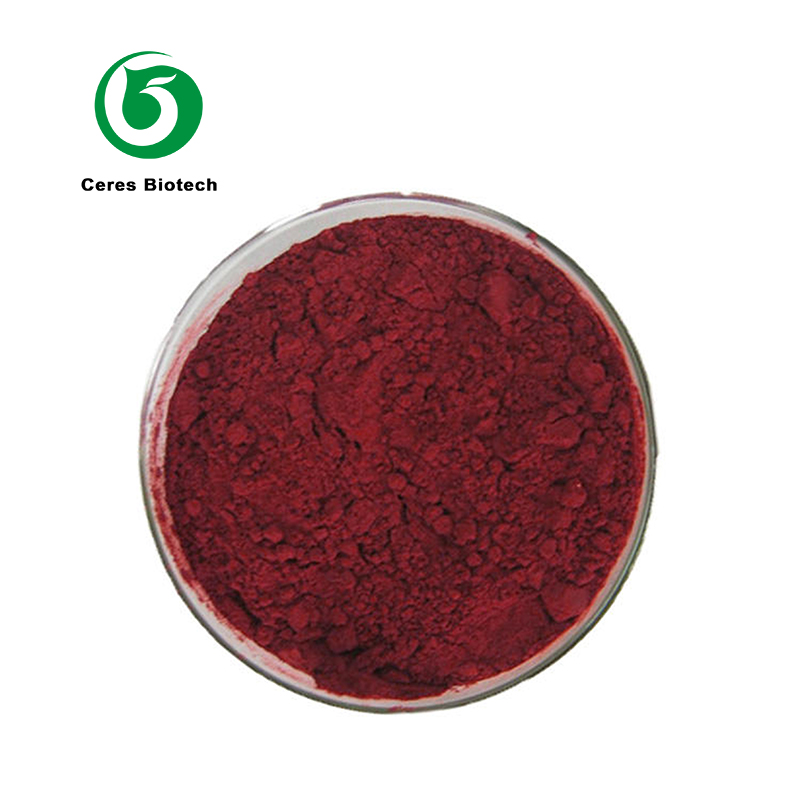
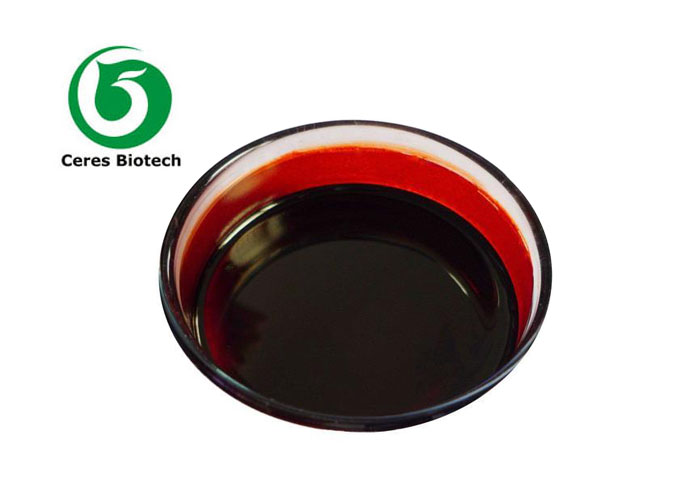
As a top China-based natural astaxanthin supplier, we ship Haematococcus-derived material with the astaxanthin-specific specs above on every lot — stereoisomer profile, free/esterified ratio, lambda max, oxidation-stability expectation and microcystin screening. When you source from the China astaxanthin market, send us your RFQ and we will return a COA you can actually read, not a list of tests every powder passes. Contact our team for samples and specifications.