0102030405
Industry News
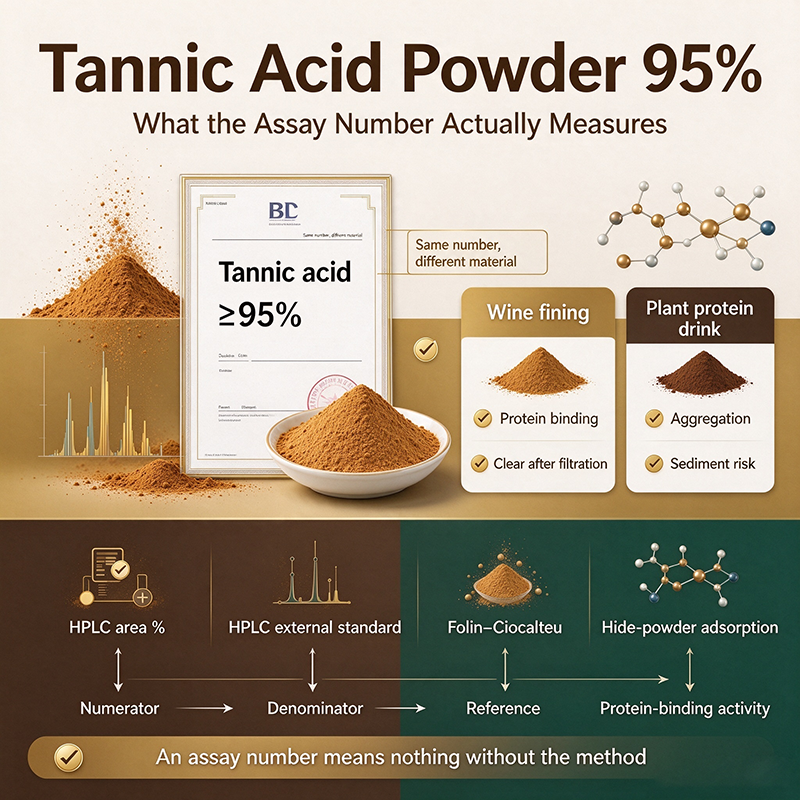
Tannic Acid Powder 95%: What the Assay Number Actually Measures
2026-11-05
Tannic acid powder 95% by HPLC is not a single-purity claim. The same assay number can mask different galloyl profiles, free gallic acid, moisture, ash and protein-binding activity, so the method and reference matte...
view
detail
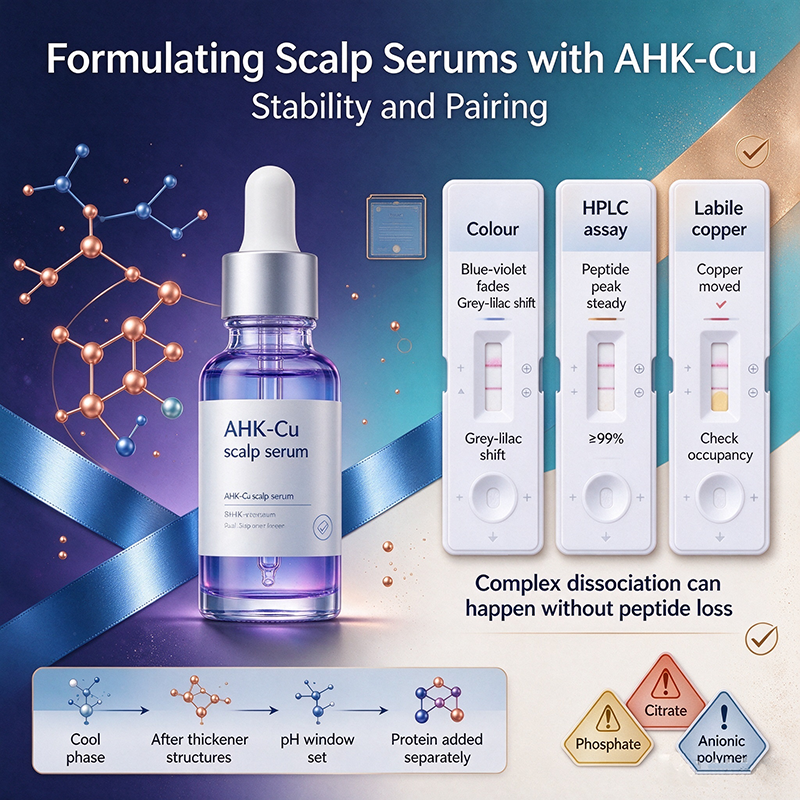
Formulating Scalp Serums with AHK-Cu: Stability and Pairing
2026-11-04
AHK-Cu scalp serums can lose blue-violet colour and develop haze while the HPLC peptide peak remains stable. The issue is often copper dissociation and ligand exchange, not just peptide degradation.
view
detail
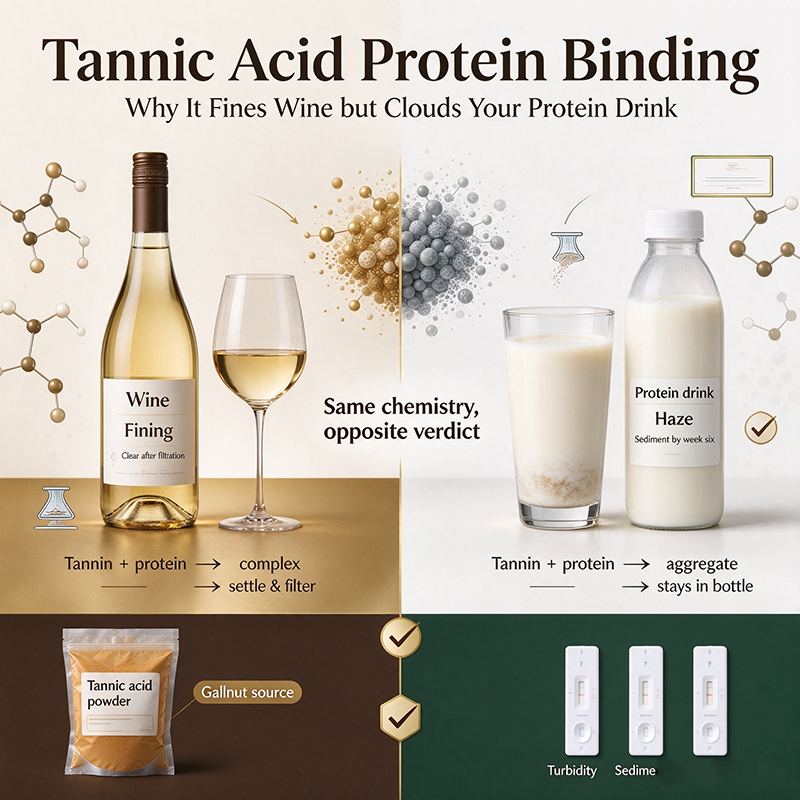
Tannic Acid Protein Binding: Why It Fines Wine but Clouds Your Protein Drink
2026-11-03
Tannic acid protein binding fines wine by forming removable aggregates, but in milk tea, plant protein and collagen drinks the same reaction causes haze and sediment over shelf life. Test before scaling.
view
detail
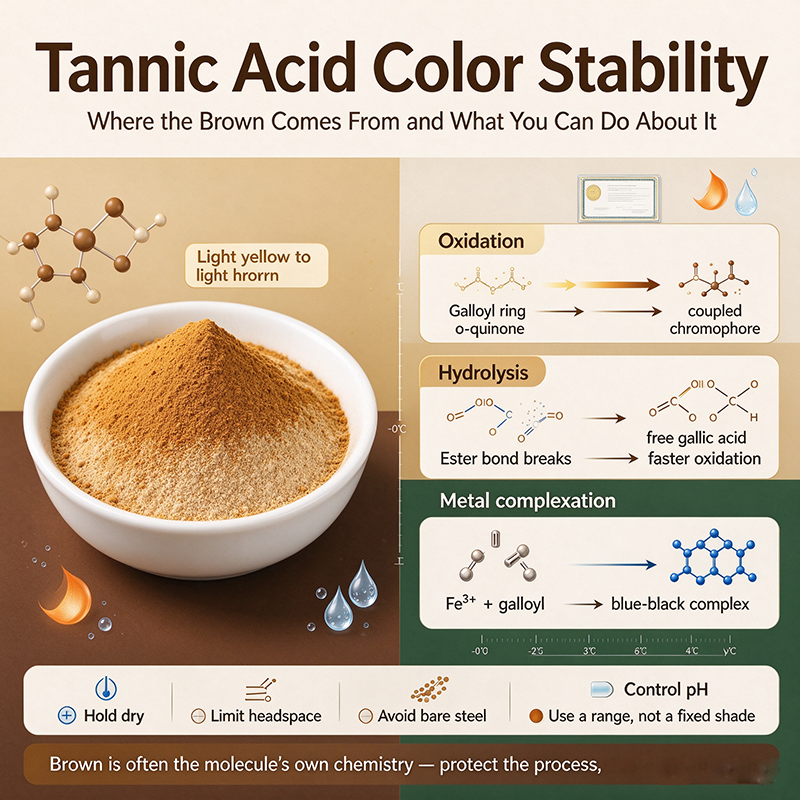
Tannic Acid Color Stability: Where the Brown Comes From and What You Can Do About It
2026-05-27
Tannic acid brownness comes from galloyl oxidation, quinone coupling, hydrolysis and iron complexation — not from impurities. Protect color by controlling moisture, headspace, pH, process steel and water iron;...
view
detail
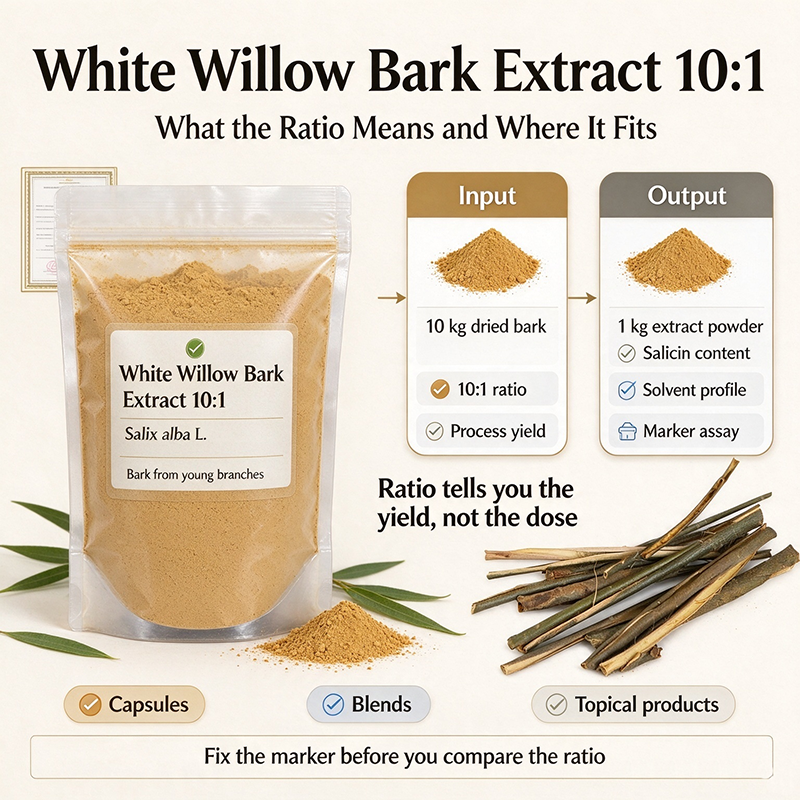
White Willow Bark Extract 10:1: What the Ratio Means and Where It Fits
2026-11-02
White willow bark extract 10:1 describes yield, not guaranteed salicin content. Compare the marker assay, solvent profile, plant part and end-use specification before sourcing.
view
detail
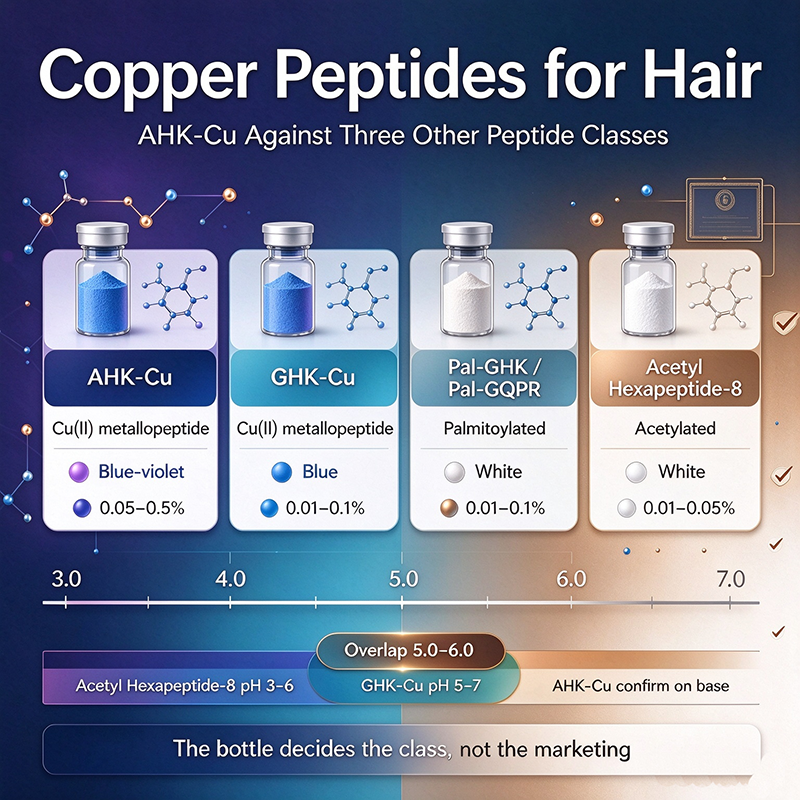
Copper Peptides for Hair: AHK-Cu Against Three Other Peptide Classes
2026-08-28
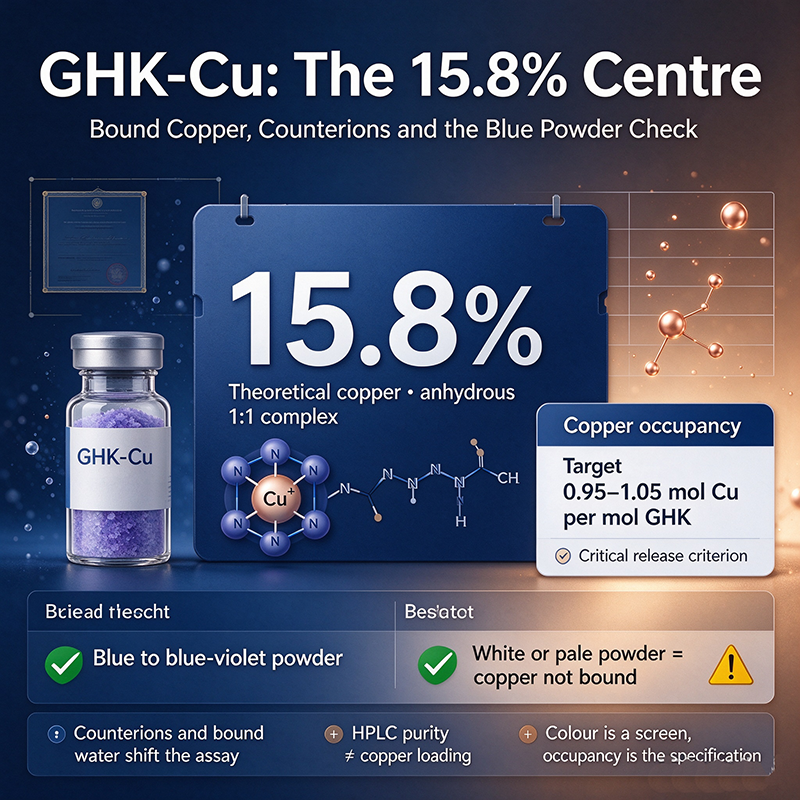
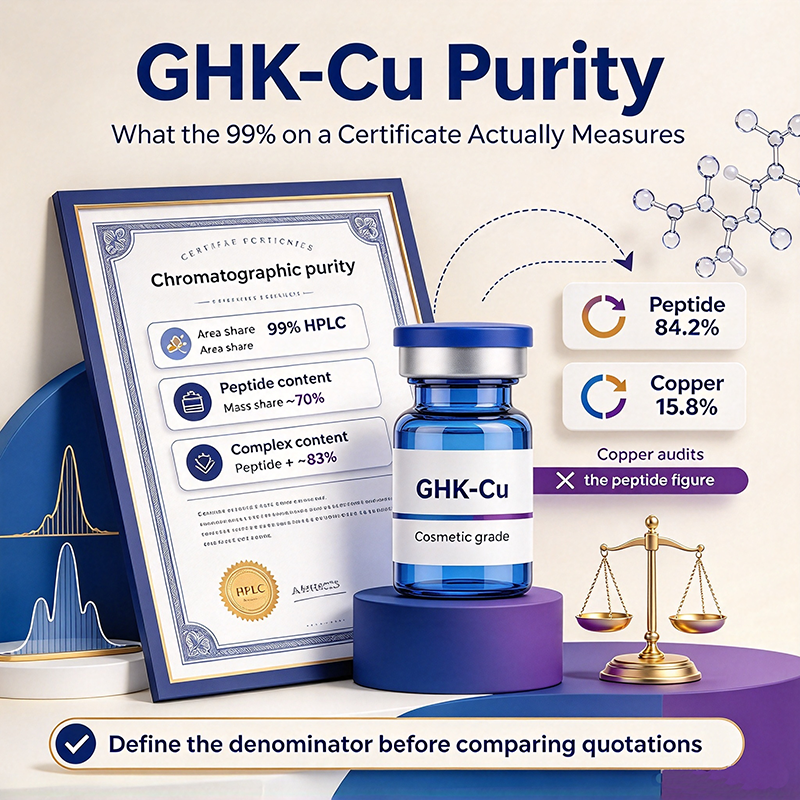
AHK-Cu, GHK-Cu, palmitoylated peptides and acetylated peptides are not interchangeable in scalp serums. The practical constraints are pH window overlap, copper coordination, colour declaration, packaging requirement...
view
detail