Hey, in today’s global market, truly understanding what’s in dietary supplements is super important—especially for buyers. These ingredients aren’t just labels; they actually affect your health and how well the product works. Brands like Herbalife and Nature’s Way have really built their reputations on high-quality formulations, so it pays to pay close attention. When you’re assessing these products, it’s not just about trusting the label—you’ve got to dig a little deeper.
Making sure the ingredients come from good sources is a big deal. Take Functional Mushroom Ingredients, for example. They’re all the rage because of their health perks, but not all mushroom suppliers are created equal. Some companies might focus more on making a quick buck rather than keeping the ingredients pure and honest. That’s why it’s smart to ask questions about where these ingredients come from and how they’re processed. And yeah, transparency in labeling really helps build trusting relationships.
Honestly, one of the biggest hurdles is the lack of strict rules and standards. That means some supplements might include stuff you don’t even know about, or undisclosed additives. To avoid falling into that trap, it's on us to be a bit more educated about what we’re putting in our bodies. When you’re informed, you’re way more likely to pick products that are safe and actually work. Bottom line? Making smart, informed choices is seriously key here—don’t overlook that.

Importance of Dietary Supplement Ingredients in Global Markets
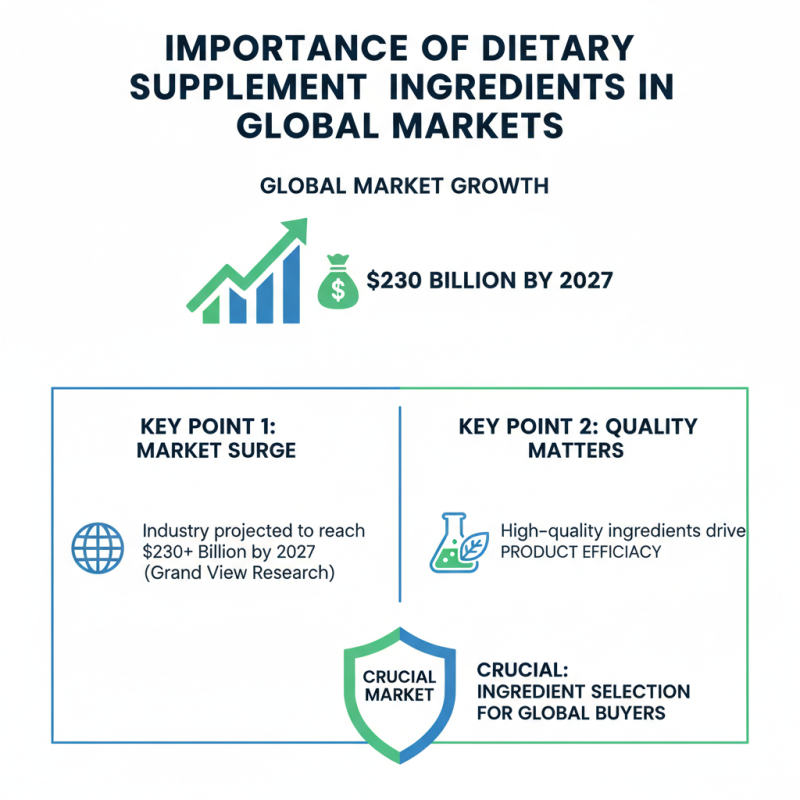
In recent years, the dietary supplement market has seen significant growth. According to a report by Grand View Research, the global dietary supplements industry is projected to reach over $230 billion by 2027. This surge highlights the importance of high-quality ingredients for buyers worldwide. Quality can significantly affect the efficacy of products, making ingredient selection crucial.
Buyers increasingly demand transparency regarding ingredient sourcing. For example, studies indicate that 70% of consumers want to know the origin of ingredients like Pms Relief Ingredients in their supplements. These insights are essential for cultivating trust and ensuring informed choices. Moreover, regulatory bodies are focusing on ingredient safety, further underscoring its importance in global markets.
Additionally, the rising trend of personalized nutrition emphasizes the need for specific formulations. Accurate labeling and reliable ingredient information lead to better consumer satisfaction. Conversely, the lack of standardization can result in consumer confusion about what constitutes an effective dietary supplement. This inconsistency needs to be addressed for better market reliability.
Understanding Regulatory Standards for Dietary Supplements Worldwide
Understanding regulatory standards for dietary supplements is crucial for global buyers. These regulations vary significantly across countries. For instance, the U.S. Food and Drug Administration (FDA) does not approve dietary supplements before they reach the market. In contrast, the European Food Safety Authority (EFSA) mandates strict pre-market evaluations. This disparity often confuses consumers and retailers alike.
A report from the Council for Responsible Nutrition indicates that approximately 77% of U.S. adults use dietary supplements. However, many may not fully understand the ingredients in these products or their regulatory backgrounds. Transparency is essential. Global buyers must be aware that some regions allow ingredients banned elsewhere. This poses risks. It is vital for consumers to investigate certifications and standards specific to their local markets.
The World Health Organization encourages harmonization of dietary supplement regulations. However, achieving a global standard remains a challenge. Stakeholders must address gaps to ensure safety and efficacy. Without proper oversight, the potential for unsafe products increases. Mislabeling and unproven claims can mislead consumers. As the supplement industry grows rapidly, so does the need for more stringent regulatory measures.
The Role of Ingredient Safety and Efficacy in Consumer Trust
In today's global market, dietary supplement ingredients play a crucial role in consumer trust. Safety and efficacy are at the forefront of buyers' concerns. According to a report by the Council for Responsible Nutrition, 73% of supplement users consider safety as their top priority. This statistic emphasizes the need for transparent ingredient sourcing.
Moreover, a study from the National Institutes of Health shows that 45% of consumers do not trust dietary supplements due to quality concerns. Many people are wary of the information provided by manufacturers. They seek evidence of ingredient safety, including certifications and scientific studies. This demand for reliable data prompts manufacturers to invest in high-quality raw materials and rigorous testing protocols.
Consumers are increasingly informed about what goes into their supplements. They value clean labels, where ingredients should be understandable and safe. A recent survey found that 68% of consumers are willing to pay more for products with a transparent ingredient list. This shift highlights the industry’s responsibility to provide not only effective solutions but also assurance regarding their products' safety and efficacy.
Market Trends: Consumer Preferences for Ingredient Transparency
Consumer preferences are shifting significantly toward ingredient transparency in dietary supplements. A recent market analysis revealed that 70% of consumers prioritize knowing the source of ingredients. This trend is particularly strong among millennials, who value ethical sourcing and sustainability. Brands that provide detailed information about their ingredients often build stronger trust with consumers.
Longevity Ingredients are becoming more popular as health-conscious individuals seek ways to enhance wellbeing. According to the Council for Responsible Nutrition, 69% of consumers are investing in supplements that claim longevity benefits. However, the challenge lies in the clarity and accuracy of ingredient lists. Many buyers express frustration when companies use vague terms or fail to disclose full sourcing information.
Transparency in labeling is not merely a trend; it is a necessity. Over 60% of consumers reported that they would switch brands if they found misleading ingredient information. In an age where information is readily available, brands must adapt by providing clear, concise details. This transparency can differentiate a company in a saturated market, allowing consumers to navigate their health choices confidently. Each ingredient should have a clear narrative, reinforcing its value and purpose in the supplement.
Strategies for Sourcing High-Quality Supplement Ingredients Globally
Sourcing high-quality dietary supplement ingredients is crucial for global buyers. Quality can significantly impact product effectiveness and consumer satisfaction. Data indicates that the dietary supplements market is projected to reach $230 billion by 2027, emphasizing the need for reliable sourcing strategies.
Buyers must prioritize transparency in the supply chain. Engage with suppliers who provide detailed ingredient sourcing information. Look for certifications such as GMP (Good Manufacturing Practices) or NSF. These indicators enhance trust and quality assurance. For example, reputable suppliers often perform third-party testing on their Sports Nutrition Ingredients, ensuring that claims match reality.
Additionally, buyers should stay updated on industry trends and regulations. Emerging markets, such as Asia-Pacific, show a rising demand for natural and organic ingredients. This trend poses challenges, such as ensuring ingredient integrity amidst growing competition. Investing time in research and supplier relationships is vital. Without this, buyers may face risks, such as ingredient adulteration, impacting product quality and consumer health.
Impact of Ingredient Origin on Market Demand and Pricing
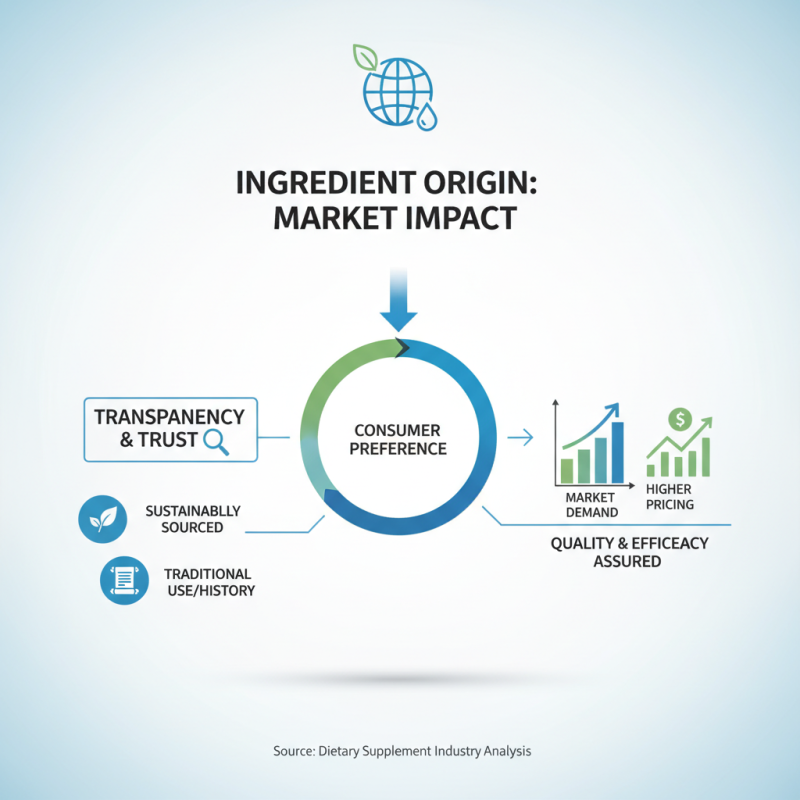
The origin of dietary supplement ingredients plays a critical role in shaping market demand and pricing. Buyers seek transparency regarding the source of their ingredients. They often prefer those that are sustainably sourced or have a long history of use. This preference adds a level of trust, as consumers feel more assured about the quality and efficacy of these products.
Ingredient origin can also influence perceived value. For instance, ingredients sourced from regions known for specific health benefits can command higher prices. Yet, this often leads to inconsistencies. Not every supplier from these regions meets the same quality standards. Buyers must navigate this landscape with caution. In some cases, the premium price does not guarantee superior quality.
Market dynamics are further complicated by regulations in different countries. Some regions impose stringent quality checks, while others have lax standards. This creates challenges for global buyers who must evaluate both the safety and authenticity of ingredients. It's essential to stay informed and verify ingredient claims. Not all that glitters is gold in the dietary supplement space.
Challenges in Quality Assurance for Global Buyers of Supplements
Quality assurance poses unique challenges for global buyers of dietary supplements. With a vast array of products available, determining the authenticity and safety of ingredients can be daunting. Mislabeling and contamination remain persistent issues, impacting consumer trust. Buyers often find it difficult to ascertain the origin of ingredients, especially for popular categories like Men's Health Ingredients. This uncertainty raises questions about efficacy and safety.
Furthermore, regulatory discrepancies across regions complicate the landscape. What is deemed acceptable in one country may not meet another country's standards. This inconsistency can leave buyers vulnerable to subpar products. Quality testing and certification processes vary widely, leading to potential gaps in assurance. Buyers must navigate these complexities while prioritizing their health and wellness.
A more proactive approach is essential. It involves conducting thorough research on suppliers and their practices. Customers should seek transparency in sourcing and manufacturing. Open communication with suppliers can lead to better understanding and reliability. As the market evolves, buyers must adapt to ensure they receive high-quality supplements that genuinely contribute to their well-being.
Why Are Dietary Supplement Ingredients Important for Global Buyers? - Challenges in Quality Assurance for Global Buyers of Supplements
| Ingredient | Source | Function | Quality Assurance Challenge |
| vitamin c | Citrus fruits | Antioxidant | Purity testing and Bioavailability
|
| Omega-3 Fatty Acids | Fish oil | Heart health | Authenticity and contamination |
| Probiotics | Fermented foods | Digestive health | Stability and viability |
| Turmeric (curcumin) | Turmeric root | Anti-inflammatory | Standardization of active compounds |
| Vitamin D | Sunlight, fortified foods | Bone health | Bioactivity and dosage accuracy |
Harnessing the Power of D-Chiro Inositol: Health Benefits and Uses of Dci D Chiro Inositol Powder
D-Chiro inositol, often referenced simply as DCI, is a naturally occurring compound that offers numerous health benefits, particularly in the realm of metabolic health. This white crystalline powder is known for its ability to support insulin sensitivity, which is crucial for maintaining healthy blood sugar levels. As a supplement, D-Chiro Inositol has gained popularity for its potential in managing conditions such as Polycystic Ovary Syndrome (PCOS) and metabolic syndrome, making it a valuable addition to health care regimens.
To maximize its benefits, D-Chiro Inositol is available in a highly pure form, typically boasting a specification of 99%. This high purity guarantees that users are receiving a potent dose that can effectively support their health goals. With a competitive price range of 250-300 USD per kilogram, it serves as an accessible choice for those seeking dietary supplements. Furthermore, the product adheres to strict safety and quality standards, certified by HACCP, ISO22000, Kosher, Halal, and other recognized entities, ensuring that consumers can trust the integrity and efficacy of their D-Chiro Inositol supplementation.
FAQS
: Regulations vary widely; some countries require pre-market evaluations while others do not. This confuses consumers.
Transparency helps consumers understand ingredients better. It builds trust and assures product quality and efficacy.
Ingredients from renowned regions can have higher prices. However, origin does not always guarantee superior quality.
Buyers often face mislabeling and contamination issues. It’s tough to verify ingredient sources and safety.
Conduct thorough research on suppliers. Look for transparency in sourcing, and maintain open communication with them.
Regulatory standards differ globally, leading to potential gaps in product safety. Not all marketed products are reliable.
The WHO advocates for harmonized regulations. However, achieving a global standard remains challenging due to discrepancies.
Not necessarily. Popularity does not equate to safety. Buyers must remain cautious and informed about products.
Focus on sourcing, certifications, and verification of standards. It’s essential to question the credibility of suppliers.
With rapid growth comes increased need for stricter regulations. Inconsistencies should be closely monitored by consumers.
Conclusion
The article "Why Are Dietary Supplement Ingredients Important for Global Buyers?" emphasizes the critical role that Dietary Supplement Ingredients play in today’s global markets. It discusses how understanding regulatory standards across different countries is essential for compliance and market entry. The safety and efficacy of these ingredients are paramount in building consumer trust, as modern buyers increasingly prefer transparency regarding the components of the supplements they consume.
Market trends reveal a growing demand for high-quality and ethically sourced ingredients, which significantly impact market pricing and consumer choices. Furthermore, the article explores the challenges that global buyers face in ensuring quality assurance throughout the supply chain, reinforcing the necessity for rigorous sourcing strategies. By prioritizing the quality and transparency of Dietary Supplement Ingredients, global buyers can effectively meet consumer expectations and enhance their market presence.